The EngenderHealth News Blog
EngenderHealth on YouTube EngenderHealth on Twitter EngenderHealth on FaceBook The latest news from and about EngenderHealth, a leading international nonprofit working in sexual and reproductive health. For more information, visit our web site or join us on YouTube, Facebook, and Twitter.
Showing posts with label sexual health. Show all posts

Friday, February 12, 2010

Fourth Africa Conference on Sexual Health and Rights

Teshome Woldemedhin is Youth and Gender Advisor for EngenderHealth in Ethiopia. Here, he shares his perspective on the Fourth Africa Conference on Sexual Health and Rights, which has been held in Addis Ababa, Ethiopia, this week.

The room was abuzz after Ethiopia's president, Girma Woldegiorgis, made the opening remarks at the Fourth Africa Conference on Sexual Health and Rights, getting things off to a promising start. The president called for increased access to sexual and reproductive health care for the poorest and most vulnerable, signaling the kind of political will that we need more of from our leaders. All too often, as Dr. Kebede Kassa of the Social Affairs Department of the Africa Union Commission later noted, "Political will is a scarce commodity."

Approximately 1,000 people are attending the conference from across Africa and elsewhere. I'm glad to see ministers of health from several countries in attendance, as well as high-ranking officers from the International Planned Parenthood Federation, World Health Organization, Joint United Nations Programme on HIV and AIDS, and other organizations.

In my opinion, some of the most valued participants are the youth EngenderHealth sponsored to attend--six young women and six young men ages 18-24, from our university project. This initiative works with universities and youth clubs and focuses on improving the sexual and reproductive health of youth by raising awareness, improving services at health clinics, and reducing gender-based violence. These 12 young people, who were also involved in planning the conference, can personally testify to the critical issues that African youth face.

I moderated a panel session on emerging issues in the area of youth's sexual and reproductive health. Some of the key issues raised included the vulnerability of young girls and the need to get young people more involved in advocating for better sexual and reproductive health services.

One of the most interesting sessions I attended was on "South-to-South" exchange: the importance of developing countries' sharing experiences and lessons learned. I think this kind of learning and partnership is one of the key outcomes of these kinds of gatherings. Instead of working on parallel tracks, we can all learn from each other. Identifying those strategies that are the most effective, then transferring and expanding upon them, can lead to smarter HIV prevention that better meets the needs of those most vulnerable.

The open dialogue of this conference is inspiring and served as yet another humbling reminder of why EngenderHealth's work in all areas of reproductive health is so vital--in Ethiopia and beyond.

Thursday, April 30, 2009

Promoting safe sex among Uganda's truck drivers

Our vice president of programs, Dr. Isaiah Ndong, was a recent guest writer for the Guardian:
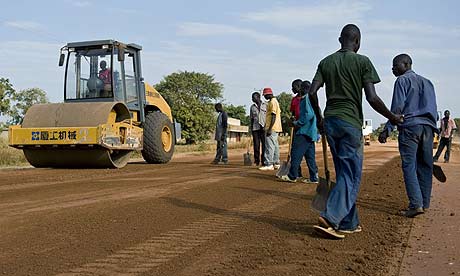
"The greater number of truck drivers that will use the new road through Katine could pose increased risks of sexually transmitted infections in the area. It is vital drivers are encouraged to lead healthy lifestyles, argues Isaiah Ndong, from the charity EngenderHealth."
Read the full article here.

Thursday, April 2, 2009

Live from MenEngage Rio: Overcoming resistance to male involvement in health services

Posted by Eric Ramírez-Ferrero

One of the recurring themes at global symposium is the resistance to male involvement in reproductive and sexual health services that we’ve encountered around the world—resistance among individuals, in communities, and from governments. And it occurred to me yet again that this resistance may be due to simple lack of imagination: When people haven’t “seen” male involvement in practice, it’s hard to fathom what programs for men could look like. What resources are required to get men involved? What expertise is needed to start effective programs? And how would such programs affect current efforts that aim to improve women’s health and lives?

On Wednesday, I attended a training session on “Engaging Men and Boys in Clinic and Social Service Settings” in which we examined the nuts and bolts of programming and started to answer some of these questions.

The training, conducted in part by EngenderHealth’s own Manisha Mehta, started with a great activity where we were each put “in charge” of providing a health service focused on either men, or on couples, and asked to think about what our client, or clients, might need: Would it be counseling, clinical care (such as testing or treatment), health education, or would broader social marketing efforts be best? It got the room thinking about what we can easily offer from means within our reach.

My assignment was: “You are a nurse speaking with a couple in which one person is living with HIV, and the other does not have HIV. They want to know about their options for avoiding pregnancy and transmitting HIV.” (I decided this couple would need both health education and counseling—perhaps slightly more counseling.)

This activity led to enthusiastic conversations and demonstrated a diversity of what male involvement programming can look like, the huge range of services that are possible, that many services can be offered at low or no cost, and—perhaps best of all—that they actually could be integrated alongside existing services for women. In fact, there was a consensus that for reasons of ethics, equity, and sustainability, an integrated approach (rather than offering separate men’s services) really makes the most sense in settings like Tanzania, where there are is already a shortage of health services.

Next, we were divided into groups and given a case study. My group examined why young people in general—those between the ages of 15 and 24—and young men in particular are reluctant to use health services, even when they are designed to be “youth-friendly.”

We also had a larger discussion of why men are reluctant to use services ostensibly designed for them—so-called “male-friendly” services. We cited many reasons, but ultimately it seems like it’s a vicious cycle: Men don’t seek services, so health clinics become geared towards women, which means that they become “women’s” places, and then men won’t go to get care because clinics are “for women.” There’s also the reality that many health clinics aren’t open during hours that men have time to go.

I was lucky that my group included a senior member from Tanzania’s Ministry of Health. We talked very concretely about how CHAMPION and the Ministry could collaborate to provide male- and couple-friendly services. It was so encouraging to see the Ministry representative’s enthusiasm for integrating services—everything from prostrate cancer screenings, to counseling for sexual anxiety and dysfunction, to better vasectomy services, and improved treatment for sexually transmitted infections—as a start!

As importantly, we discussed how we might offer counseling to men—in a site outside of a clinic—that can help them examine and start to change behaviors (like having multiple sexual partners at the same time) that make them more likely to spread HIV.

This conversation cemented a key point of the training workshop: Male-friendly services cannot exist in a vacuum. Instead, they need to be an integral part of a continuum of care for whole families. This is what will make a difference in the lives of men, women and children.